
The Battle of Lundy’s Lane Notes
History Notes
After taking Fort Erie and Chippawa in early July, 1814, American forces under the command of General Jacob Jenning Brown were camped at Chippawa, waiting for an opportunity to attack Fort George. Brown was in need of heavy artillery reinforcements which would be needed for a siege of the Fort and, although he sent repeated messages to American naval commander Isaac Chauncey, the necessary artillery was never sent. In order to prevent Brown from obtaining armaments from Fort Schlosser on the American side at Niagara Falls, Sir Gordon Drummond, administrator of Upper Canada and commander of the Canadian Forces, ordered an attack on Fort Schlosser. General Brown was not in a position to defend Schlosser, and so, hoping to force the Canadians to abandon their attack, he decided to attack Fort George on July 25, 1814.
In preparation for the attack on Fort George, Brown instructed Brigadier-General Winfield Scott to march north from Chippawa, along the shore of the Niagara River to Lake Ontario. When he was in the vicinity of the Falls, Scott caught sight of a few British officers, but was not alarmed until he neared Lundy's Lane and saw the Canadian and British forces led by Riall, near a church at the top of the hill. British General Phineas Riall was on his way to St. David's, having been sent by Drummond to amass the Canadian regular forces, and was under orders not to fight unless it was unavoidable. Thus, while Scott arranged his Brigade into battle formation and sent a messenger to request that Brown send the remainder of the American forces immediately, Riall began to withdraw his forces.
However, General Drummond, who was just arriving with reinforcements from York, ordered Riall to return to Lundy's Lane. Drummond ordered the British cannons to be placed on a slope by the church and deployed his forces for battle. The Glengarry was on the right, the 89th, some members of the Royal Scots and a company of the 41st Regiment comprised the centre on the slope behind the guns, and the Incorporated Militia and a company of the 8th made up the left. Although Brigadier-General Scott realized that his men were outnumbered, his Brigade could not retreat without making itself vulnerable to an attack from the British, and thus, at 6:00 pm on July 25, 1814, with the British army barely assembled, Scott attacked the centre and left portions of the British formation. The centre was able to repulse all attacks, but the Twenty-Fifth Infantry, led by Major Thomas Jessup, circled through the woods east of Portage Road, outflanking the left section of the British troops. In this operation, General Riall, who had been seriously wounded, was captured by the Twenty-Fifth. In spite of these small victories, the Americans gained no strategic advantage, and the British were able to hold their ground.\\
U.S. takes the heights
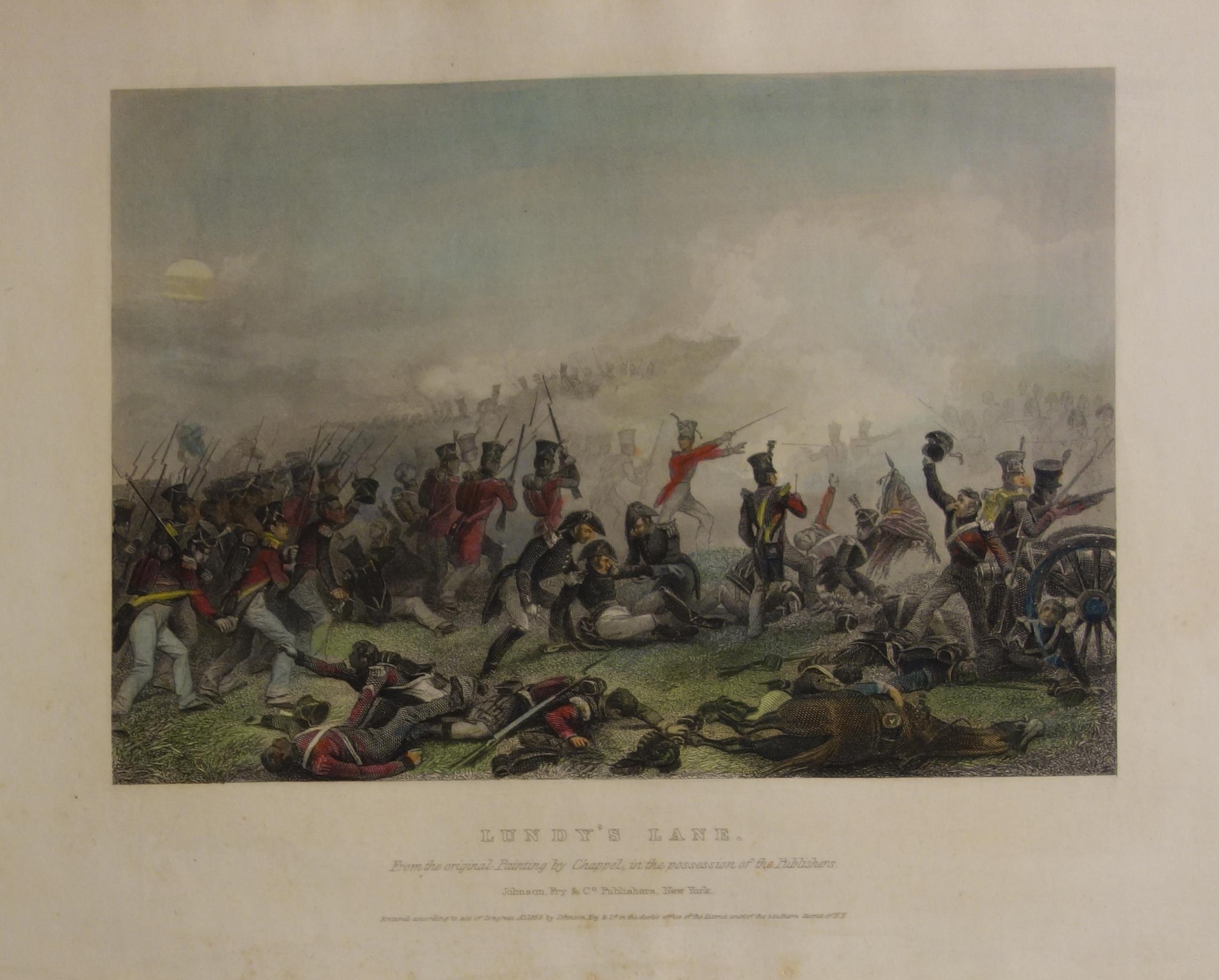
Eleazer Wheelock Ripley realized that the key to success or failure at Lundy's Lane would depend on possession of the cannon on the slope, and therefore sent Colonel James Miller and the Twenty-First Infantry to take them. Protected by the dark, they succeeded in getting close enough to the British soldiers guarding the guns to attack them with bayonets. During this attempt, every British soldier defending the guns was killed, and soon all of the high ground had fallen to the Americans. However, the Battle continued for several more hours, during which time Drummond and his weary troops repeatedly charged the equally exhausted American soldiers, with little change in position. Around midnight, Brown realized that if the British did not give up soon, his men, exhausted and in need of ammunition, would not be able to hold the ground which they had won. Although seriously wounded, Drummond rallied his troops for one last charge around midnight, and succeeded in regaining possession of the guns on the slope. General Brown ordered a retreat; the British soldiers did not pursue them: they were so tired that they lay down and went to sleep, right on the battlefield.
Casualties and the British re-capture the heights
General Brown, and Brigadiers-General Scott and Porter had all been injured in the battle, and so Brigadier-General Ripley assumed command of the American forces. The morning after the battle, Ripley and his soldiers returned to reoccupy Lundy's Lane. However, when Ripley saw that the British had received fresh reinforcements and had positioned themselves nearly a kilometre in advance of the battlefield he ordered a retreat to Fort Erie. In a hasty and disorderly manner, the American soldiers abandoned their camp, dumped equipment and provisions into the River, burned Street's Bridgewater Mill, and destroyed the bridge at Chippawa. Thus, although there was no clear winner at the Battle of Lundy's Lane, the British did not lose any ground in the attack and succeeded in forcing an American retreat. Also, though Americans often claim victory at this battle, the destructive actions of the retreating American soldiers were much more reminiscent of a defeated rather than a victorious force.
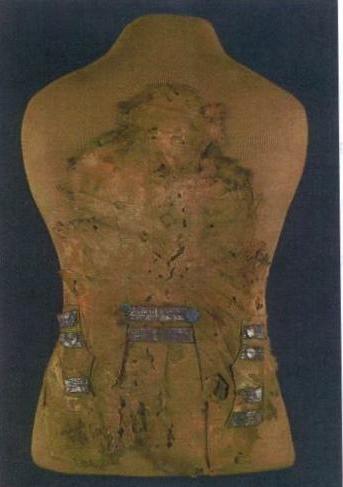
Largely due to the fact that the Battle of Lundy's Lane was fought primarily in the dark with musket flashes providing the only light, casualties were heavy on both sides. Indeed, the Battle of Lundy's Lane is often called the "fiercest and bloodiest battle" of the War of 1812, with 876 British and Canadian soldiers and 861 American soldiers killed, wounded or captured. A scene of carnage greeted the soldiers on the morning after the battle: dead horses and the bodies of both American and British soldiers were piled on the battlefield. Too numerous for a conventional burial, the fallen soldiers were burned in huge funeral pyres.
The site of the Battle of Lundy's Lane soon became a spot of interest for tourists. To provide a better view of the battlefield, a series of five towers was constructed on Lundy's Lane. A battle memorial known as the "Soldier's Monument" was erected by the Canadian Parliament and unveiled by the Lundy's Lane Historical Society on July 25, 1895. Located in the Drummond Hill Cemetery, it marks the remains of 22 British soldiers who are buried in the vault beneath it. Three bronze plaques bearing the names of those killed in the Battle of Lundy's Lane were added to the monument in 1938.
Search our collection
We have many artifacts from the Battle of Lundy's Lane in our online collections database.
You may also be interested in
Sign up to our Newsletter
Stay up to date on the city's activities, events, programs and operations by subscribing to our eNewsletters.