
The Upper Niagara Bridges
History Notes
The Upper Suspension Bridges (1869 to 1897)
First Edition Falls View Suspension Bridge (1867 to 1889)
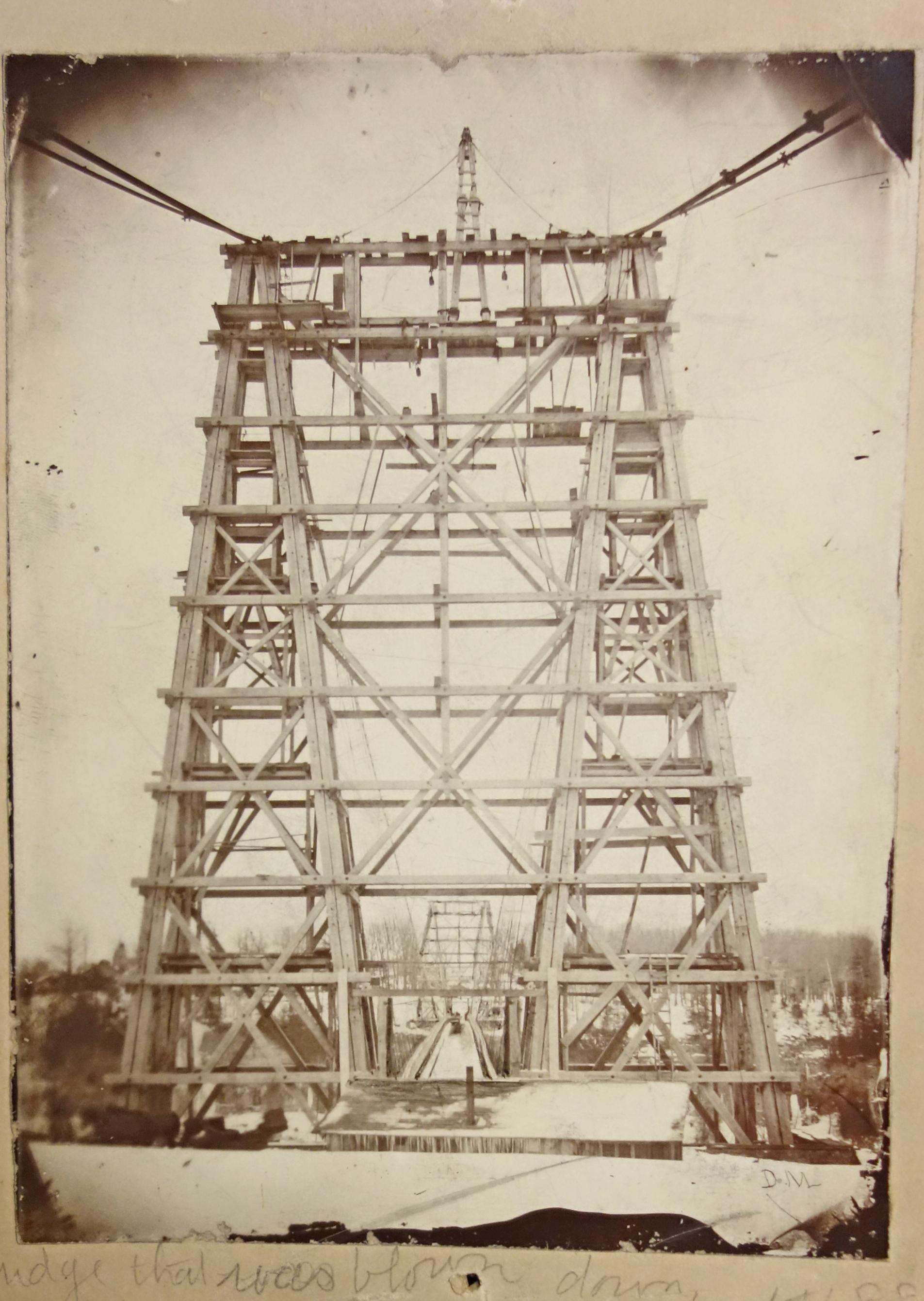
With the success of the Railway Suspension Bridge at the Whirlpool, there was considerable pressure from local business people to build a bridge closer to the Falls. On May 22, 1867, a Canadian charter was granted to the Clifton Suspension Bridge Company to build a suspension bridge at Falls View (within view of the Falls). A bridge design by the chief engineer of the project, Samuel Keefer, was completed by June, 1867, and wooden towers were erected on either side of the site. Work on the bridge structure progressed slowly and was suspended entirely from October, 1867 to May, 1868, possibly due to a lack of funding. In February, during the ice bridge, cables were extended across the gorge. The bridge deck was laid in October, 1868, and opened to traffic on January 4, 1869, with a splendid ceremony.
With a span of 1,260 feet, the Upper Suspension Bridge was the longest suspension bridge in the world and was built at a cost of $150,000. Located 900 feet below the American Falls, the span was anchored by four wooden towers, each 28 feet square at the base and 4 feet square at the top. The height of the towers were different on the American and Canadian sides as a result of different levels of rock, and so the American tower stood 100 feet tall while the Canadian one rose to height of 105 feet.
Update to the Falls View Suspension Bridge (1872 to 1889)
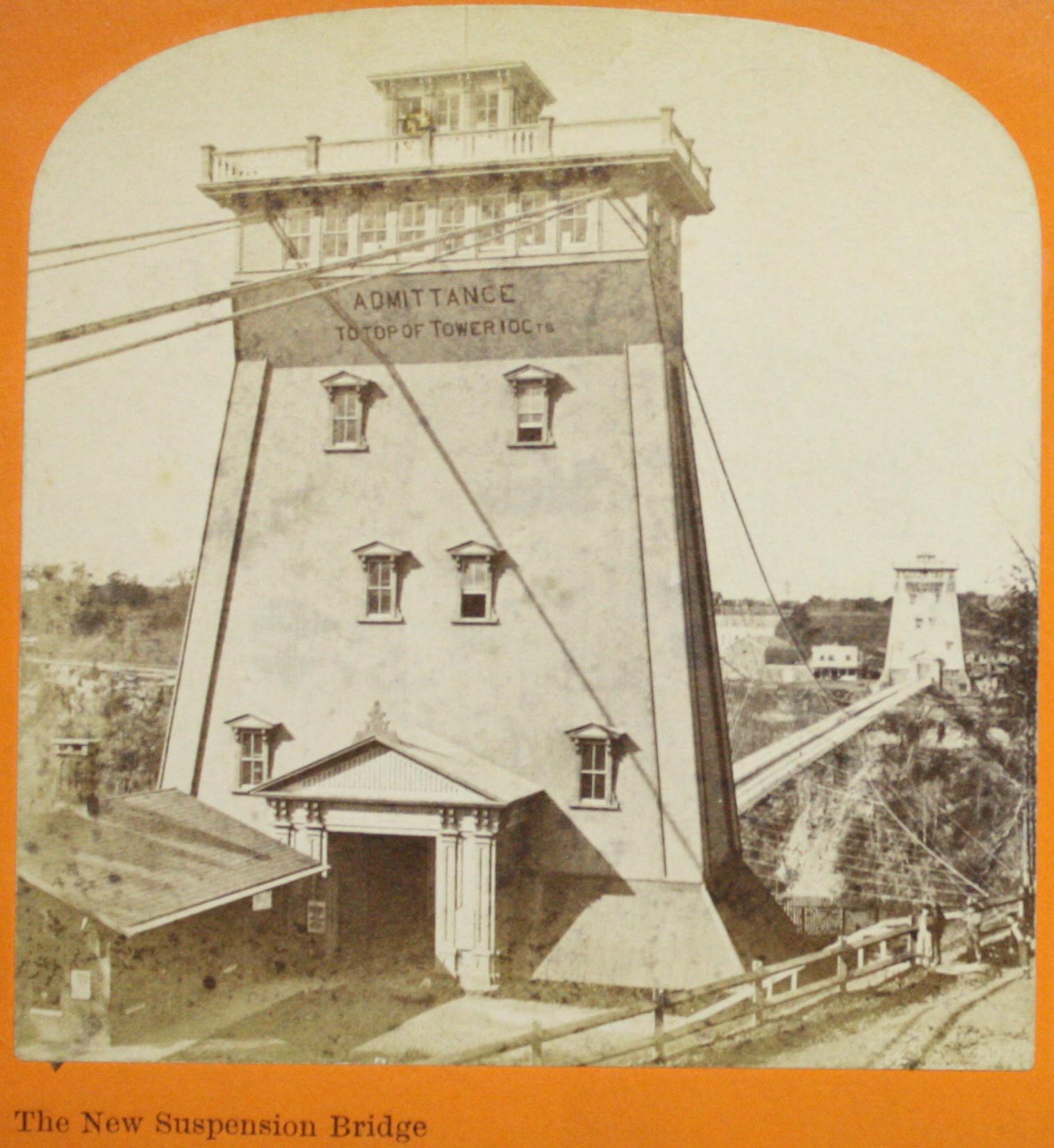
In 1872, the Bridge Company enclosed the open towers with wood on three sides and corrugated iron on the fourth. The lower levels of the towers were made into a board room and offices for Customs and Immigration Officers. They also built an observation deck which was accessed by a newly installed elevator. The wooden deck supports were replaced with iron in 1876, and when the bridge was re-planked in 1881, a few electric lights were installed. The wooden towers of the bridge were replaced with steel in May of 1885.
The width of the bridge was only 10 feet, and as a result, traffic could only flow in one direction, leading to traffic congestion and delays on both sides. The Bridge Company decided to rebuild the bridge, making it wider for two way traffic and stronger to carry heavier loads. Everything except the steel towers were rebuilt by the Rochester Bridge works, and the new bridge was completed in the fall of 1888. Instead of the usual river guy lines, they decided to use a lateral wind cable, which proved to be a costly mistake. The bridge had been in service for only 2 months when it was destroyed by a strong southwest gale on January 9, 1889.
Second Falls View Suspension Bridge (1889 to 1897)
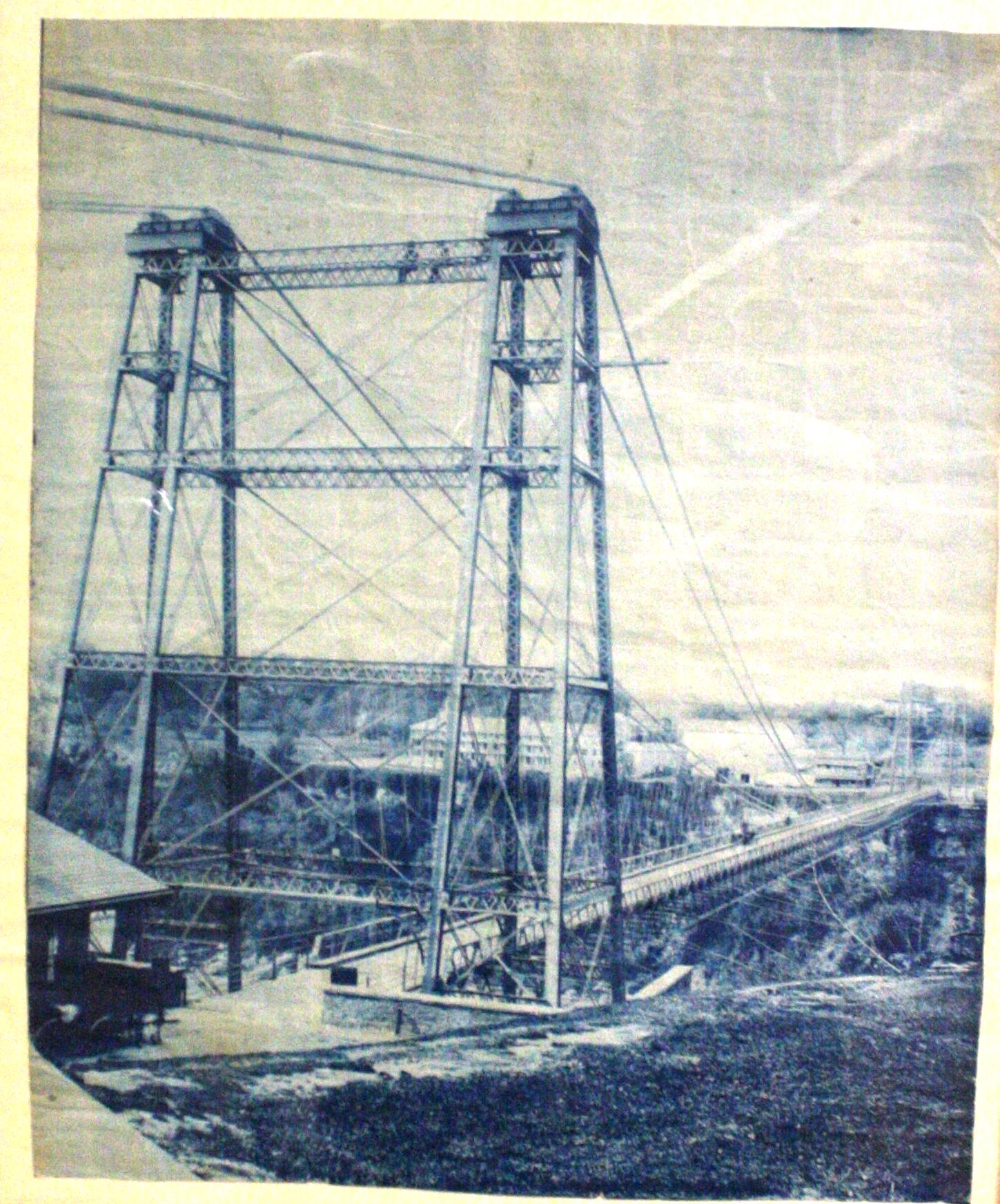
The Bridge Company decided to rebuild the bridge. On January 30, the contract was awarded to the Rochester Bridge and Iron Works, which quickly built the bridge according to the plans of the old bridge, but with a new system of storm cables. The bridge was opened on May 7, 1889, less than four months after the destruction of the old bridge.
Upper Steel Arch Bridge (1897 to 1938)
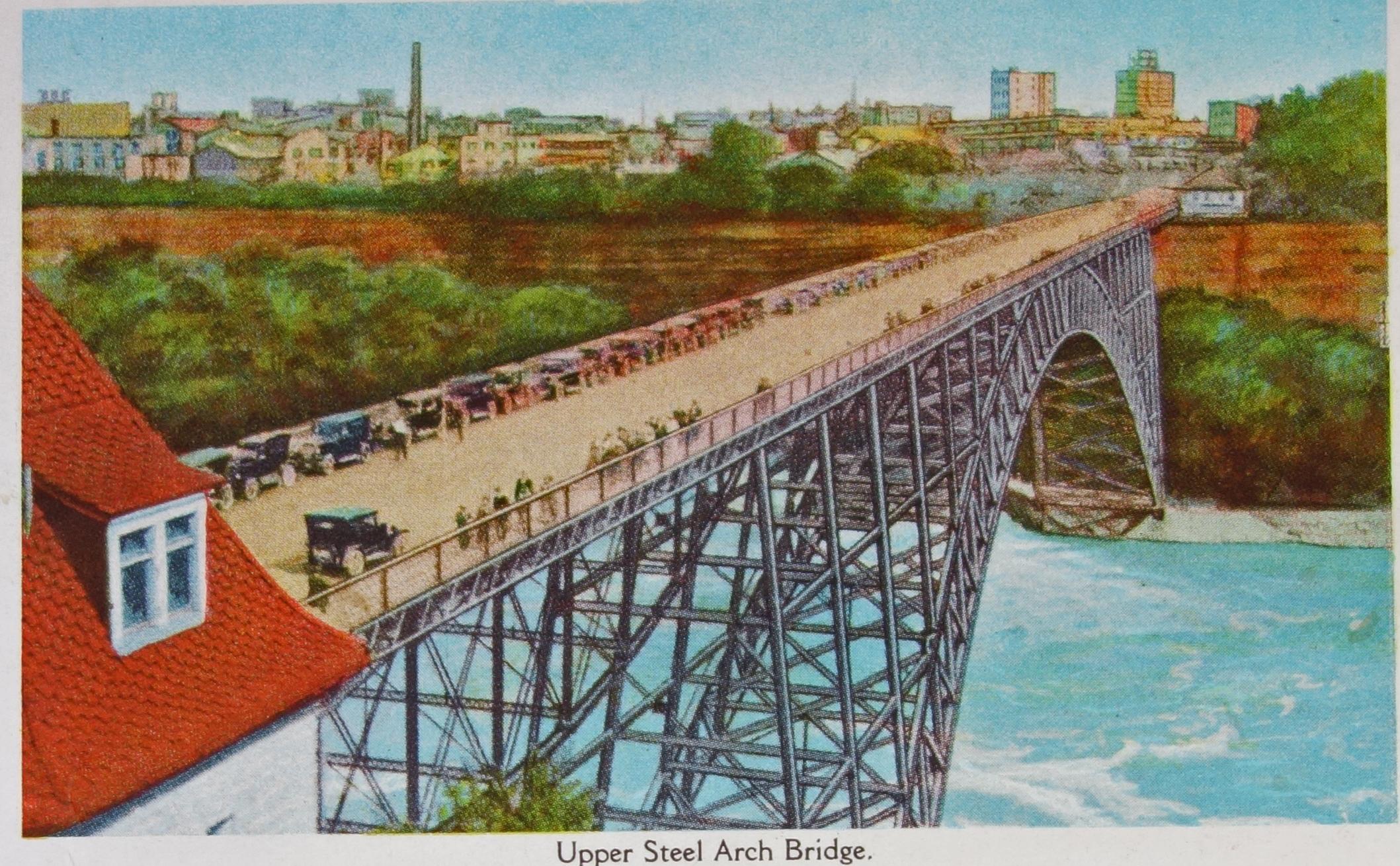
With the advent of the electric railway, the bridge was found to be increasingly unable to support heavy loads. With the intention of strengthening and expanding the existing structure, the Bridge Company hired Leffert L. Buck, who suggested that it would be necessary to build a new bridge to sustain the heavy traffic. As a result, the Bridge Company decided to build a new arch bridge on January 5, 1897.
The Canadian abutment of the bridge was constructed directly below the Suspension Bridge, but the American abutment was constructed 14 feet closer to the American Falls. Both abutments were located only a few feet above the water level of the River, and it is this proximity to the water level which would prove to be the downfall of the bridge some 40 years later. The contract for the steel structure of the bridge was awarded to the Pencoyd Bridge Company of Philadelphia in May, 1897. The steel structure was built under and around the existing Suspension Bridge, which was dismantled after the new bridge was completed.
The Upper Steel Arch Bridge, also known as the Falls View Bridge and Honeymoon Bridge, opened to traffic on June 23, 1897, and with a span of 840 feet, it became the longest such structure in the world. The completed bridge was one floor and had double tracks for electric trolleys, as well as room for carriages and pedestrians. The Upper Steel Arch Bridge was a beautiful and graceful structure which offered a spectacular view of the Falls.
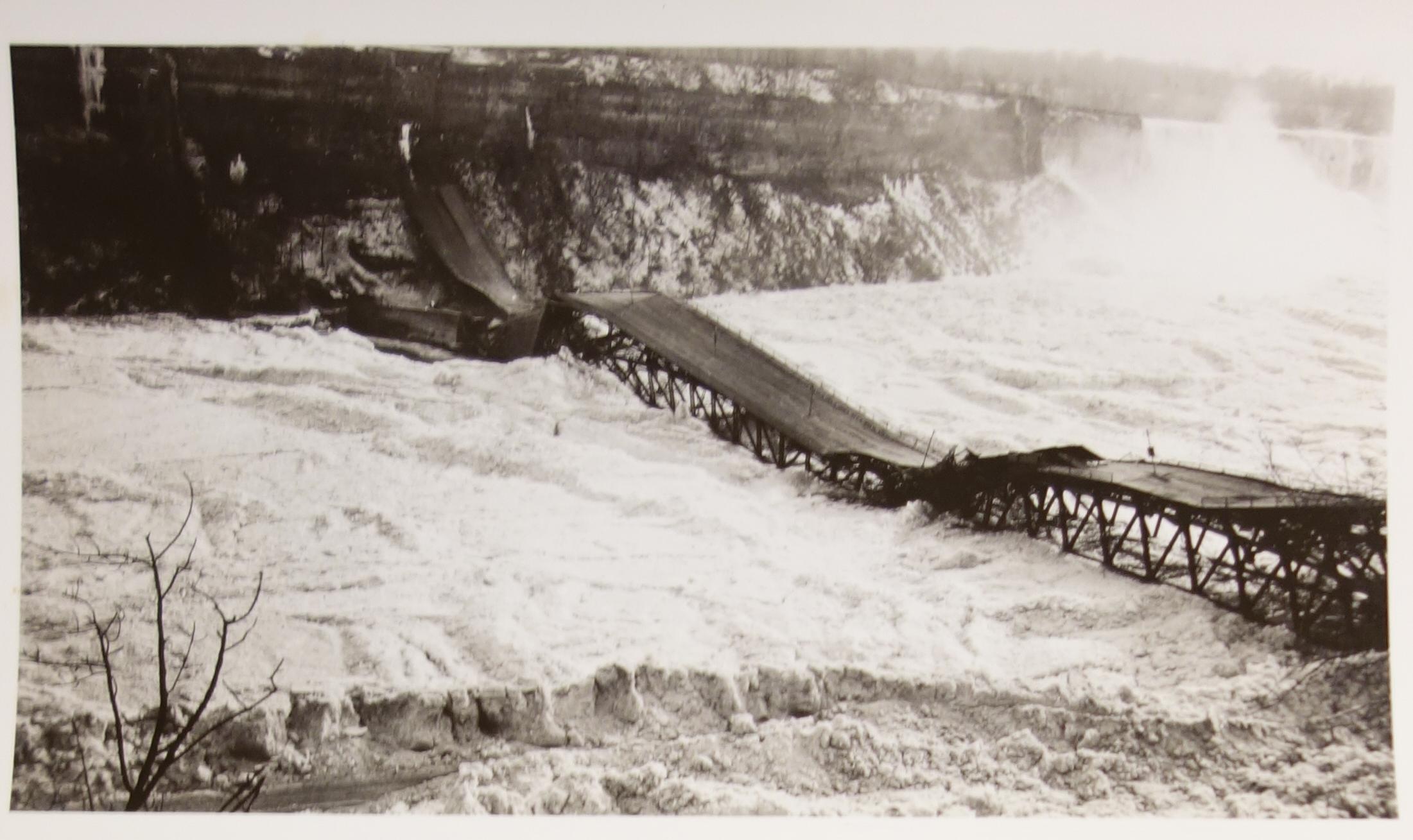
The abutments of the bridge were so close to the water that they had to be constantly protected from the ice which jammed in the river every year. In January, 1938, an ice jam caused by a combination of thin ice on Lake Erie, a 5-day thaw and 3 days of high winds spelled the end of the Upper Steel Arch Bridge. Nearly 100 feet of ice twisted the steel frame of the bridge, and as it creaked and groaned, spectators knew that it would be only a matter of time before the bridge collapsed. At about 4:10 p.m. on January 27, 1938, a movement of ice on the American side pushed the bridge off of its abutment. With a huge roar, it collapsed into the gorge, forming a twisted steel "W" on the ice below. The wreckage of the bridge was cut into six sections which remained for the duration of the winter, until the ice bridge began to break-up. On April 12, 1938, the pieces of the once-grand bridge began to sink, one by one, the last one disappearing from view at 4:00 p.m.
Rainbow Bridge (1941 to present)
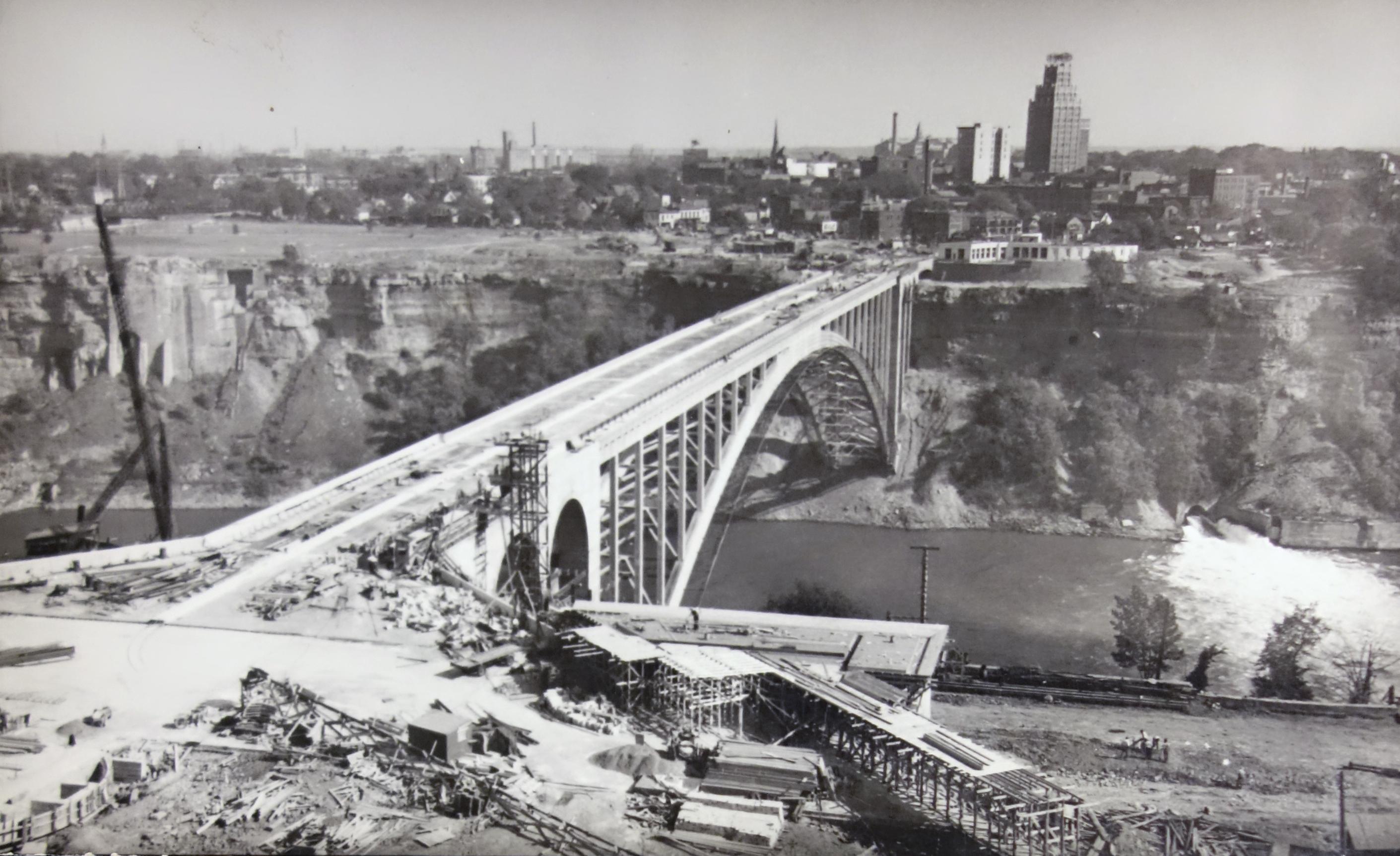
Concerns over the safety of the Upper Steel Arch Bridge had led the Niagara Parks Commission to consider the possibility of building another bridge near the Falls. Using The Niagara Falls Observation Bridge Company as their delegate, the Commission obtained a charter to build a new bridge at Falls View. When the Honeymoon Bridge was destroyed, plans to build this new bridge were well underway, and the Commission announced that it would build a new bridge as soon as possible. However, the International Railway Company, which had owned the Honeymoon Bridge, also declared their intention of building a bridge on that location. This was the beginning of the fourteen-month battle between the Parks Commission and the International Railway Company for the right to build the new bridge. On April 29, 1939, the Bridge Commission, which had been jointly created by the Legislature of Ontario and the State of New York, awarded $615,000 to the International Railway Company, and the dispute was finally settled.
The bridge was designed by Edward P. Lupfer, and the ground was broken for the foundations in May, 1939. On February 17, 1940, construction of the steel structure began, and a christening ceremony was held for the bridge. The name "Rainbow Bridge" was chosen as a symbol of the friendship between Canada and the United States. The Rainbow Bridge was completed in the Fall of 1941, and celebrated its official opening on November 1 . The Bridge has a span of 1450 feet and is 202 feet above the water level. The deck has two 22 foot roadways separated by a barrier and a walkway for pedestrians. A stone tower with a carillon of bells was added to the bridge complex in June, 1947. The bridge remains a popular crossing and extensive renovations to enhance the traffic capacity of the Rainbow Bridge are currently underway.
Sign up to our Newsletter
Stay up to date on the city's activities, events, programs and operations by subscribing to our eNewsletters.